Research Summary: The following information is provided for research context only.
BPC-157 Research Overview
BPC-157 (Body Protection Compound-157) is a synthetic 15-amino acid peptide derived from a sequence found in gastric juice. The compound has been the subject of extensive preclinical research, particularly in in-vitro models studying angiogenesis, fibroblast activity, and cellular signaling pathways.
Mechanism of Action
BPC-157 has been observed to interact with the nitric oxide (NO) system and to upregulate growth hormone receptor expression in fibroblast cultures. Preclinical studies report that it influences the formation of new blood vessels (angiogenesis) and the migration of fibroblasts in cell-culture models. Its cytoprotective activity in gastrointestinal tissue models has been linked to interactions with the prostaglandin and dopamine systems.
Research Applications
In laboratory research, BPC-157 has been used as a model compound for studying angiogenesis, fibroblast migration, extracellular matrix and collagen-organization assays, nitric-oxide pathway signaling, and gastrointestinal mucosal-integrity models. It has also been used in CNS cell-culture research examining neuronal signaling pathways.
Compound Specifications
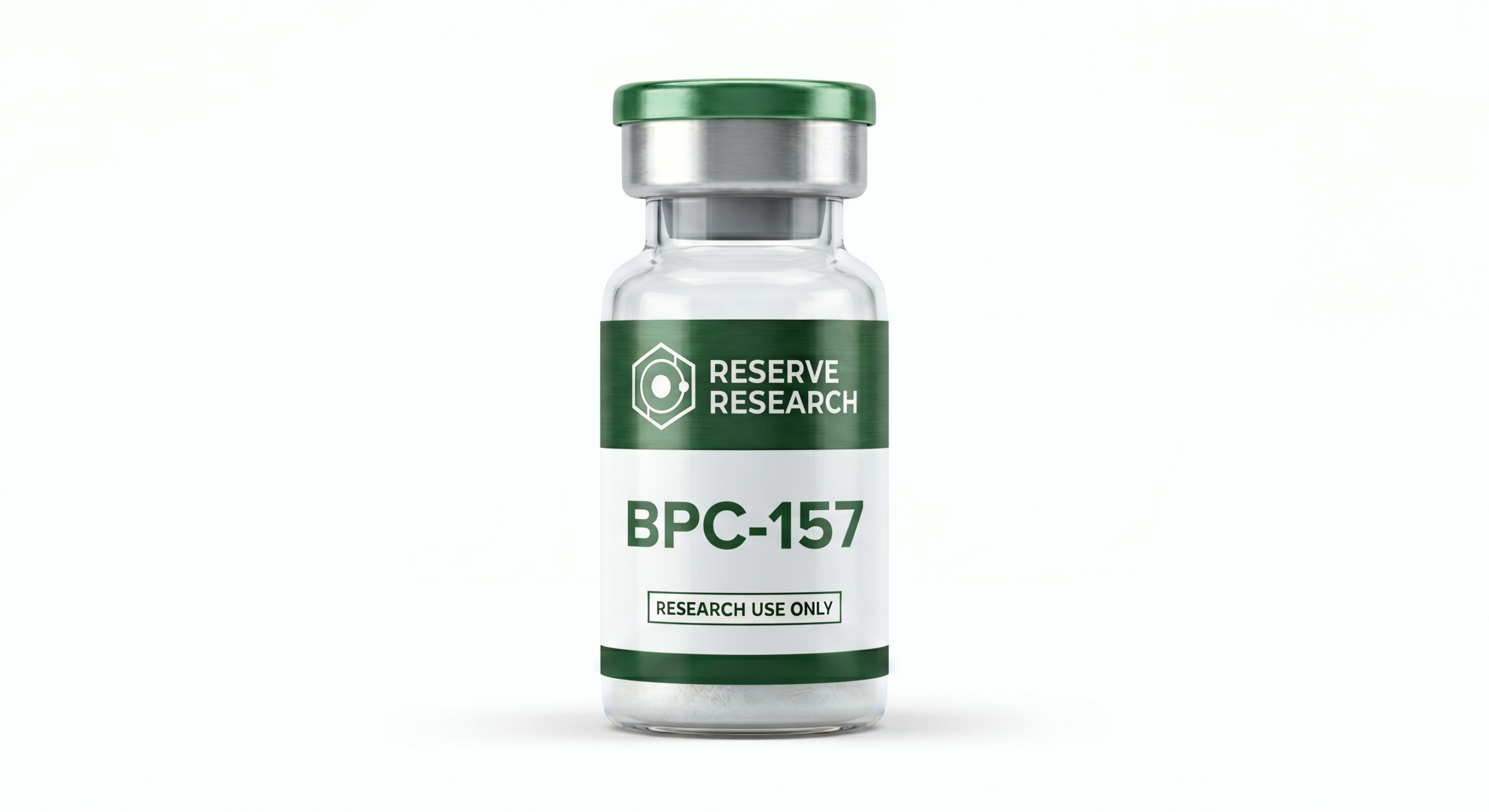
This vial contains lyophilized BPC-157 at high purity, verified by independent, third-party analytical testing. Molecular weight: 1419.5 Da. Molecular formula: C62H98N16O22.
Storage and Handling
Store lyophilized BPC-157 at -20°C, protected from light and moisture. Once reconstituted in bacteriostatic water, store at 4°C and use within 28 days. All handling should be performed by qualified researchers in an appropriate laboratory setting.
For research use only. Not for human or veterinary use.

Reviews
There are no reviews yet.